Just for fun, I added some color to my Barack Obama cartoon.
Saturday, March 22, 2008


Monday, March 17, 2008
Happy Saint Patrick's Day!
 Just for Saint Patrick's day, here's a drawing of a four-leaf clover!
Ireland is a country in which the probable never happens and the impossible
always does.— Sir John Pentland Mahaffy
Ireland is a small but insuppressible island half an hour nearer the sunset
than Great Britain.— Thomas Kettle “On Crossing the Irish Sea”
Cast your mind on other days
That we in coming days may be
Still the indomitable Irishry.— W.B. Yeats
Saturday, March 15, 2008
A Short, Short Story
 (Note: I wrote this story while on a high school field trip to Wesleyan Writer's Workshop. We were all asked to write a story based on someone we had met. Austen Getner and I were both black belts in the same ATA martial arts academy. He was very short for his age, but never let it bother him, and he had an infectious personality.)
It was the long-dreaded first day of school, which as far as a twelve-year-old is concerned is a euphemism for doomsday. A life sentence after a glorious summer of adventure. The students who were most unhappy with having to come back darted to the desks in the back of the room, as though willing themselves as far away as possible from the center of learning. Near the front were the outcasts: the loners, nerds, freaks, and a boy who was noticeably shorter than anyone else in the room, with short blond hair and bright eyes. He seemed less devastated to have to be back than some of the others and actually wore a slight smile, which vanished when he felt a stabbing pain in the back of his head. He turned around furiously and saw on the floor the sharp pen which had been used as the missile, and near the back of the room, the student who had thrown it. “Hey guys, why do you think little Austen Gimpner always sits at the front? Is it just so he can be as close to the teacher as possible, or is it that he can’t see over anyone’s head?”
“No one can see past your swelled head, Boris.” said Austen. This won a hearty laugh from the nerds. Last year, Austen had been the only one with the spunk to stand up to Boris and his cronies. They were glad to see that Austen hadn’t changed.
“All right, class, that’s enough,” said a gruff voice. Everyone stopped talking. The teacher had been in the room the whole time, hidden from view by his large swivel chair which he turned around to face the class. “I’m Mr. Atlas. Welcome to the fifth grade.” As Mr. Atlas dropped from his chair, there was an audible gasp. He was barely four feet tall. “Let’s not waste any time. Grab a science text book and turn to chapter one,” he said reaching as high as he could to write on the chalkboard. “Oh, Boris is it?” he asked. “Try to keep your comments on Austen’s height to yourself, can you?”
Thursday, March 06, 2008

Thursday, February 14, 2008
Pride and Prejudice
 For Valentine's Day, here is a sketch of Elizabeth Bennet and Mr. Darcy, Jane Austen's classic caustic couple.
Friday, February 08, 2008

Monday, February 04, 2008
Charcoal Self-Portrait
 I did this during my Junior year. The assignment was to draw ourselves but not to show our faces. I used black and white charcoal and grey chalk. Capturing my leather jacket was a challenge, but I liked how it turned out.
Jesus Shirt

I did this in my sophmore year in Mrs. Wilson's high school art class. It earned a silver medal at Nebraska State Visual Arts Competition. I did it in ink and used pointillism (thousands of tiny dots). I especially like it because I'm wearing one of my favorite T-shirts.
Quincy
 This is a scratchboard portrait of my dog, Quincy. A scratchboard is a white board covered in black ink. By using special tools, you scratch away the ink revealing the white underneath, so it's like drawing in reverse. It's a difficult medium because it is almost impossible to correct mistakes. I love how doleful Quincy looks in this picture. He is a great dog.
Good and Faithful Servant: Michael Reagan
 This is the most recent in a series of ink drawings I did for my school newspaper. The illustrations were for articles about the lives of great Christian thinkers.
Friday, January 25, 2008
The Dragon of the West

Uncle Iroh is my favorite character on the Nickelodeon show Avatar. He is kind, wise, and possesses a wry wit. I've drawn him here in an anime style called "Mega D." I believe the Japanese call ridiculously small and cute characters "chibis." So this is "Chibi Iroh!"
Tuesday, January 01, 2008
In a public school . . .
 Just a thought: if you believe that God had an active role in the creation process, why is it so hard to believe he could produce miracles? Which is harder: to create matter out of nothing or to change water to wine? It all boils down to what you believe about creation.
Sunday, November 25, 2007

Monday, October 29, 2007
Anton Chekhov
 Anton Chekhov was a Russian writer in the late nineteenth century. He is most famous for his plays and numerous short stories. Popular playwrite Niel Simon based his hilarious play, The Good Doctor, on these short stories.
When my high school chose The Good Doctor for our one-act play, I was asked to draw an ink portrait of Chekhov for posters, programs, and other publicity. Notice the intensity in Chekhov's face.
(p.s. I actually got to play Chekhov in that play!)
Sunday, October 07, 2007

Friday, October 05, 2007
The Scarlet Pimpernel
 "We seek him here, we seek him there,
Those Frenchies seek him everywhere.
Is he in heaven? Is he in hell?
That demmed elusive Pimpernel."
(Baroness Orczy, The Scarlet Pimpernel, "Chapter 12" )
Sunday, September 30, 2007
Two New Characters!
 Meet Rachel's Family! On the left is her older, tweenage sister, Rudy. On the right is her little sister, Ruby.
Sunday, September 23, 2007

Wednesday, September 19, 2007
The Bard
So I was thinking, why is it that the old artists never gave Shakepeare a smile? I'm sure the man who wrote As You Like It, A Midsimmer Night's Dream, and The Comedy of Errors didn't walk around looking glum all the time. . .
 . . . So here is Shakespeare smiling! :)
Sunday, September 16, 2007
LCS - Mandatory Volunteerism
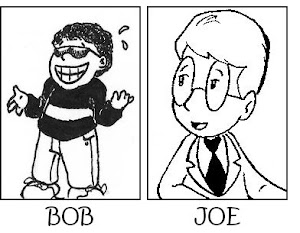
 At LCS students are required to perform 30 hours of volunteer service. I love how Bob is scratching his desk.
Answer Came There None
 I doubt there is any character in literature more fun to caricature than Horace Rumpole. Rumpole is a frumpy British barrister, and the central figure of John Mortimer's Rumpole short stories. Rumpole is old, weathered, skilled at cross-examination, enjoys the occasional cheroot and bottle of Pommeroy's plonk, and is fond of reminicing about his greatest success: the Penge Bulgalow Murders, which he won "alone and without a leader!" The Rumpole stories are a must-read for those interested in the legal profession, or for anyone who loves a good mystery, especially Sherlock Holmes. Or you might check out the television series, with the great Leo McKern as Rumpole.
Sunday, September 09, 2007

Wednesday, August 01, 2007
Are You Looking at my Nose?

One of those wild swashbucklers in a masque -
Hat with three plumes, and doublet with six points -
His cloak behind him over his long sword
Cocked, like the tail of a strutting Chanticleer -
Prouder than all the swaggering Tamburlaines
Hatched out of Gascony. And to complete
This Punchinello figure - such a nose! -
My lords, there is no such nose as that nose -
(Edmond Rostand, Cyrano de Bergerac, Brian Hooker
Translation, Act I)
This is the second installment in my new series of portraits of memorable literary characters. And who is more memorable or more of a character than Cyrano?
Wednesday, July 25, 2007
Good and Faithful Servant: Peter Kreeft

I have never met Peter Kreeft, but I feel as though he's in the same room talking to me every time I open one of his books.
Those who have been inspired by C.S.Lewis will relish the writings of Peter Kreeft. Lewis is actually a main character in Kreeft's fictional dialogue Between Heaven and Hell, and Kreeft pays homage to Lewis' famous work, The Screwtape Letters, with his hilarious piece, The Snakebite Letters. However, what sets apart Peter Kreeft from any other author is how he uses Socrates to defend Christian beliefs. That’s right, Socrates! What would happen if the greatest philosopher returned to life in modern times? What would Socrates think of the teachings of Jesus or issues like abortion? Kreeft explores these questions in his series of books starring Socrates. The most dynamic of these is The Unaborted Socrates, in which Socrates defends the rights of the unborn child, and his pro-abortion opponents find his logic unanswerable.
This book should be required reading for anyone struggling with this issue or for those who want to defend their pro-life views. From Socrates, we can learn to spot the flawed logic used to justify abortion and how to convince people that an unborn child deserves life. Once you have a taste of Peter Kreeft’s powerful writing, you will definitely be hungry for more. In addition to The Unaborted Socrates, there are several other Socratic dialogues by Kreeft which can be read in any order. However, if you only read one book about abortion in your whole life, make it The Unaborted Socrates. It will make you think!
Those who have been inspired by C.S.Lewis will relish the writings of Peter Kreeft. Lewis is actually a main character in Kreeft's fictional dialogue Between Heaven and Hell, and Kreeft pays homage to Lewis' famous work, The Screwtape Letters, with his hilarious piece, The Snakebite Letters. However, what sets apart Peter Kreeft from any other author is how he uses Socrates to defend Christian beliefs. That’s right, Socrates! What would happen if the greatest philosopher returned to life in modern times? What would Socrates think of the teachings of Jesus or issues like abortion? Kreeft explores these questions in his series of books starring Socrates. The most dynamic of these is The Unaborted Socrates, in which Socrates defends the rights of the unborn child, and his pro-abortion opponents find his logic unanswerable.
This book should be required reading for anyone struggling with this issue or for those who want to defend their pro-life views. From Socrates, we can learn to spot the flawed logic used to justify abortion and how to convince people that an unborn child deserves life. Once you have a taste of Peter Kreeft’s powerful writing, you will definitely be hungry for more. In addition to The Unaborted Socrates, there are several other Socratic dialogues by Kreeft which can be read in any order. However, if you only read one book about abortion in your whole life, make it The Unaborted Socrates. It will make you think!
Saturday, July 21, 2007
Constant Vigilance!

. . .it was a face unlike any Harry had ever seen. It looked as though it had been carved out of weathered wood by someone who had only the vaguest idea of what human faces are supposed to look like, and was none to skilled with a chisel. Every inch of skin seemed to be scarred. The mouth looked like a diagonal gash, and a large chunk of the nose was missing. But it was the man's eyes that made him frightening.
One of them was small, dark, and beady. The other was large, round as a coin, and a vivid, electric blue. (J.K. Rowling, Harry Potter and the Goblet of Fire, 184-185)
Friday, July 13, 2007

Sunday, June 17, 2007
Still-life in Yellow and Purple
 I painted this in junior-high. The assignment was to only use the colors yellow and purple, which creates a neat effect.
Friday, June 01, 2007

Sunday, May 27, 2007
The Keebler Elf, Heroic

I just beat The Legend of Zelda: Ocarina of Time for the first time ever! Oh yeah!
Tuesday, May 22, 2007

Sunday, May 20, 2007

Friday, April 20, 2007

Sunday, February 11, 2007

Good and Faithful Servant: Chuck Colson
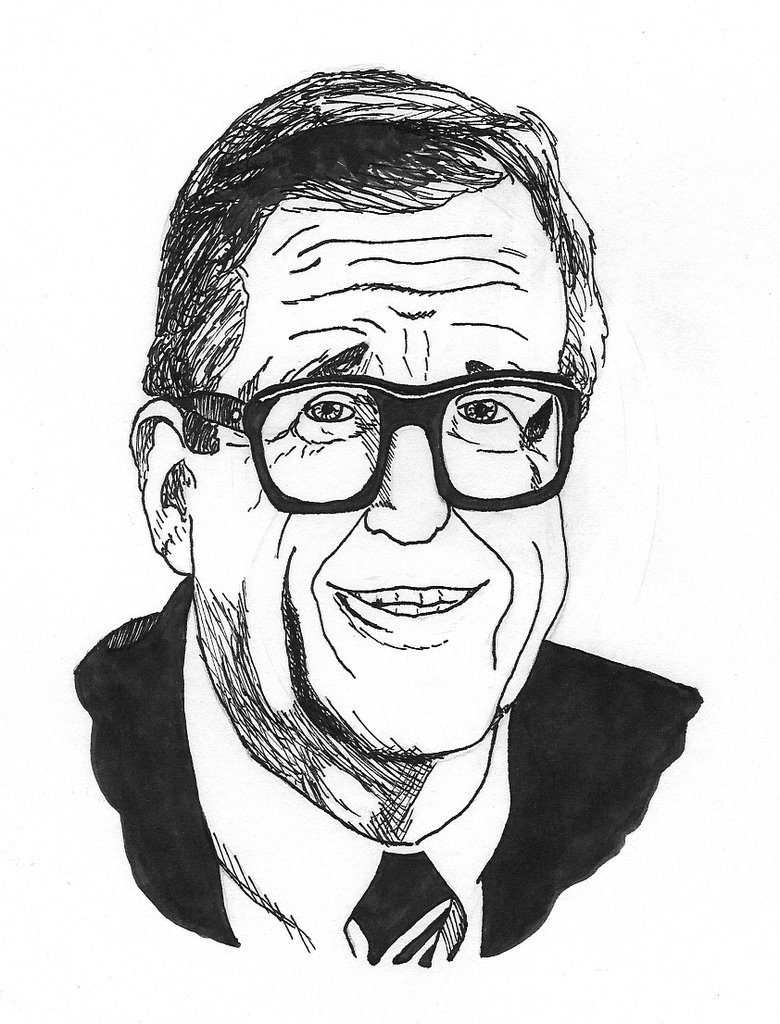
If Richard Nixon wanted something done right and done quickly, he went to Chuck Colson. Colson was not only a vital member of Nixon’s election and reelection team, he was a close friend and advisor of Nixon. “Tricky Dick” applauded Chuck for his strategy and determination, and he gave Chuck the credit for the record-breaking Presidential victory. However, Colson felt worn out after the arduous reelection battle where he had earned the title of Nixon’s “Hatchet Man.” Reluctantly, Nixon accepted Colson’s resignation, but they stayed close. The following years were trying for Colson. When the newspapers had reported a break-in at Watergate months earlier, Colson barely gave it a second thought. As the White House’s ties to Watergate were revealed, many biased reporters accused Colson of ordering the break in. Of course, Colson neither knew beforehand nor did he participate in the cover-up, as Nixon’s security tapes eventually showed, so Colson thought he wouldn’t even be indicted. However, biased newspapers and TV networks asserted that Colson was responsible for the whole affair. It was likely that Colson would be made the scapegoat despite the lack of evidence against him.
During this stressful time, Colson did a lot of soul searching. His life felt so empty after leaving the president’s service. What was there left for him in life? His friend Tom Phillips helped Colson through those troubled times. Tom had once been an ambitious man, climbing the corporate ladder rung by rung until he reached the top. A change seemed to have come over Tom Phillips in recent years: he seemed more genuine, pleasant, and joyful. Colson was surprised to discover that Tom Phillips had “gotten very religious,” talking about how “having a relationship with Jesus Christ” had changed his whole outlook. Colson found this odd. How could Tom talk about having a relationship with a man who lived 2000 years ago? Colson found the answers in Tom’s copy of Mere Christianity. Colson wanted to examine all his religious beliefs and started filling a notebook with his questions, starting with “Is there a God?” Under this heading, he wrote “pros” and “cons.” After reading C.S. Lewis’ first chapter, Colson had filled three pages with “pros” for God’s existence. Convicted by C.S. Lewis’ irrefutable logic, Colson accepted Christ.
Because of liberal bias in the news, Colson was eventually indicted along with three of Nixon’s top aides. One of the men involved with Watergate had plea bargained with the prosecution and only received a sentece of six months. The prosecution made Colson an offer as well: if Colson testified for the prosecution and pleaded guilty to a misdemeanor, he could get out of prison in a few short months, or maybe even avoid prison altogether. However, Colson was innocent and it would be dishonest to admit to something he hadn’t done. He did, however, plead guilty to obstruction of justice, a felony. Because of his honesty, Colson received one to three years of imprisonment.
During his time in prison, Colson started a prayer group with the other Christian inmates. This experience inspired Colson to found Prison Fellowship after his release. Through Prison Fellowship, Colson has witnessed to countless prisoners, showing them how much they need Christ. Colson is also the author of several books, including the story of his salvation, Born Again.
Cool Teacher! Mr. Currie
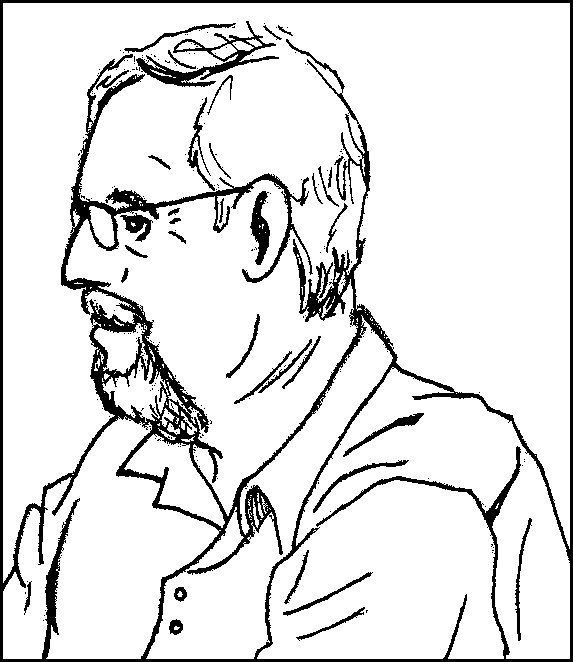 Mr. Currie is a very fun teacher, who is always cracking his students up in his world history and geography classes.
 Cool Teacher! Mr. Gerken
 Mr. Gerken taught me Ninth grade English. Since he is in charge of journalism, we still work together all the time. He is a very fun man to draw.
 Saturday, February 10, 2007
LCS - I'm Pro-life
 Choice cards are small blue or white cards LCS students recieve at the start of every school year. If your card is signed five times, you reciece a detention. Zach, the spikey-haired boy in stripes, is another of my favorite characters. He plays a lot of video games, loves Star Wars and Lord of the Rings, and. . .well, is pretty zany.
 LCS - Lockers
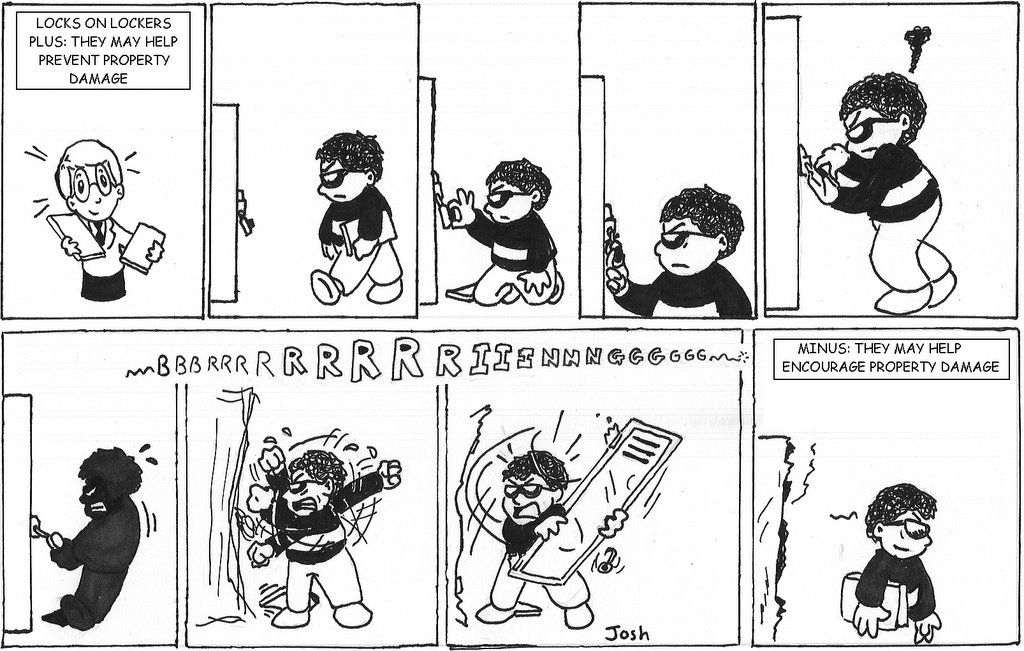 My sophomore year, LCS required all students to put combination locks on their lockers. Students were not pleased. I remember one of my classmates went so far as to duct tape his locker shut in protest. I was amazed that this comic was not censored.
 LCS - Helicoptors
 Some of the comics I've done have only been published in my school newspaper, The Light. Usually this is because I wrote about some topical issue or about something unique to LCS ("choice cards" were a regular topic). When I wrote this, road closings made it very tricky to get into school. To me, this comic is very symbolic. Bob and Joe coming to LCS. I had been homeschooled from kindergarten and I had never even set foot in a "real school." Also, you'll notice the helicoptor is owned by Duncan Aviation. I was asked more than a few times if my family owned the company!
Coach Rockjaw
 This is the front for a t-shirt I designed for a Crhistian youth group. The back read "His Pain, Your Gain!"
Good and Faithful Servant: Cal Thomas
 Cal Thomas once received a letter calling him a moron. He was amused by the fact that the word “moron” was misspelled.
 Since 1984, Cal Thomas has published a bi-weekly conservative column which is now published in over 550 newspapers, and he is the author of over several books including The Things that Matter Most, The Death of Ethics in America, and Blinded by Might (with Dr. Edward Dobson). Also, he has traveled across the country speaking at schools and churches, defending his beliefs and offering advice. “I read the New York Times and my Bible every day so that I know what each side is doing,” Cal is fond of telling his audiences.
Cal Thomas first worked with NBC News as a copy boy. Then one Friday, his boss asked him if he had a minute and told Cal he was being laid off. Before that, Cal used to have a low opinion of people who lived on Welfare. “They’re lazy. They live off my tax money.” Then he found himself visiting the unemployment office and accepting Welfare checks. He called everyone he knew, looking for a job, but people who he thought were his friends didn’t return his calls. One day, sitting in the unemployment office he was struck by his situation. A few days earlier, he owned a press pass that allowed him to enter the White House and stand next to the President. That day he was sitting next to a truck driver with mud on his shoes. During this time, a friend told Cal and his wife about a prayer breakfast movement. At the prayer breakfast, Cal heard about having a relation with Jesus Christ. “Excuse me?” he thought. He had gone to church and all that, but he had only thought of Christianity as a religion. A speaker read a Living Bible at the breakfast. Cal realized that he had never read the Bible and quickly purchased a copy. He found out that God exists objectively, regardless of what people think, and that people are not basically good. In fact, people are basically bad! Fortunately, he also read about God’s forgiveness. Nobody told him all this; he learned it from reading the Bible.
What sets Cal apart from some other conservatives is that he doesn’t just poke fun at liberals, but he gives good advice to his religious audience. Christians would do well to remember his insights.
“Abortion is not the cause of America’s depravity, it is a reflection of it,” he has stated repeatedly. A common anti-life argument is that even if we illegalize abortion, abortions will still take place by the thousands. Of course, this “argument” isn’t an argument at all; it’s an assertion. We have laws against murder and drugs and child abuse, but all those things take place everyday! However, the assertion is true. Laws against abortion will not save many unborn lives. In order to do that, we have to change hearts. The same is true with many other issues Christians are passionate about: gay marriage, euthanasia, embryonic stem cell research, violence and depravity.
“Some people look upon elections as a salvation experience. That if we can just get the right people into office, then we can have what I call ‘trickle-down morality.’ How can government do that? The number-one problems in America are not economic and political! They are moral and spiritual! They are beyond the reach of political leadership,” Cal Thomas explains. Of course, this doesn’t mean that Christians should withdraw themselves from politics. “Elections are important, but they’re not decisive,” he continues. We can do all we can, but if America is going to change it must be God’s will. “God, make America worthy of your blessing again,” he concludes.
Friday, February 02, 2007

Monday, January 29, 2007
Red Vines Comic
 I drew this comic especially for the Red Vines Drawing Contest and I won third place for my age division! This comic was seen by people across the country!
 Tuesday, January 02, 2007
"Bader than old King Kong, and meaner than a junkyard dog"
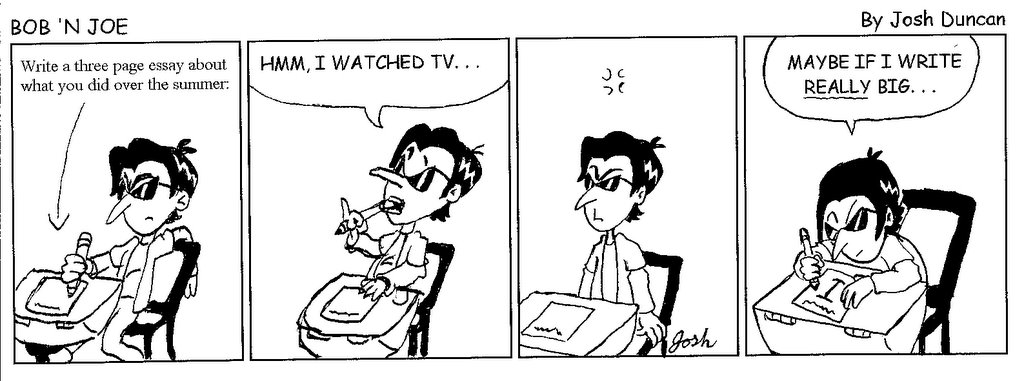
Boris was inspired by the song "Bad, Bad Leroy Brown" by Jim Croce. He's been held back a grade and resents the brainy Joe for being in the same class as he is. I am told that someone started rolling on the floor laughing when he read this comic.
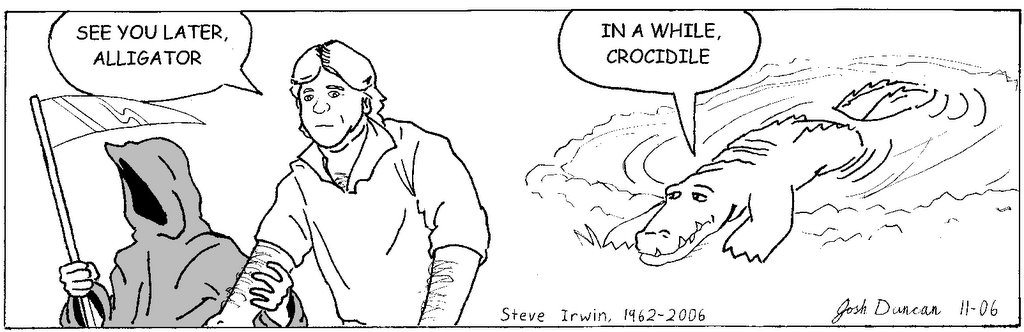
Introducing Rachel
 Rachel Joy, a fiery red-headed tomboy, is my favorite character. She is partially based on my younger sister Becca. Her father is an attorney, by the way.
Saturday, December 30, 2006
If it looks like a duck, walks like a duck, and quacks like a duck...
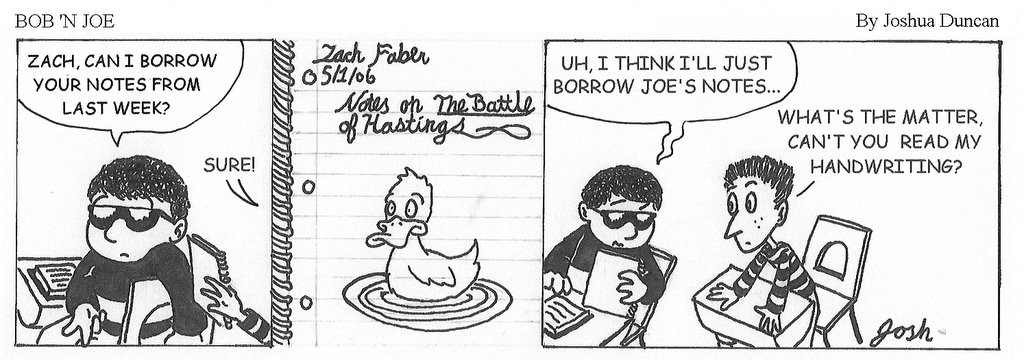 My dad, Rick Duncan, gave me the idea for this one.
 One small step for Joe
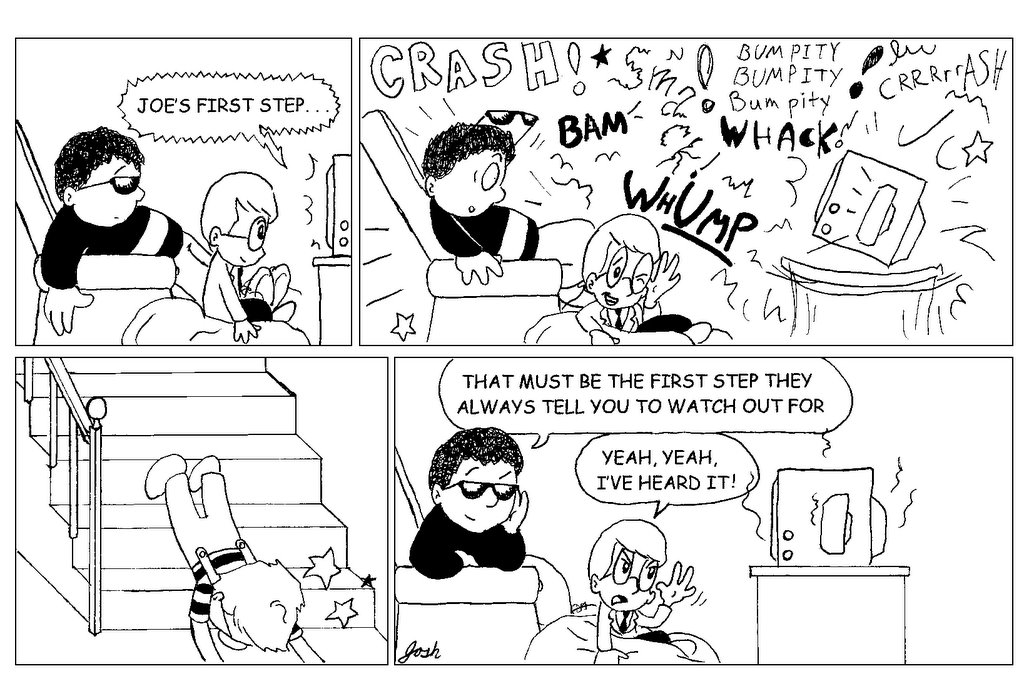 A "Sunday" strip. Actually, since The Country Chronicle is a church newsletter, most of my comics are published on Sunday anyway!
Subscribe to:
Posts (Atom)